Pothos has a reputation as the plant that grows anywhere. Put it on a shelf, hang it in a window, forget about it for a week, and it usually keeps going. So when the leaves start turning yellow or brown, it feels like something strange is happening.
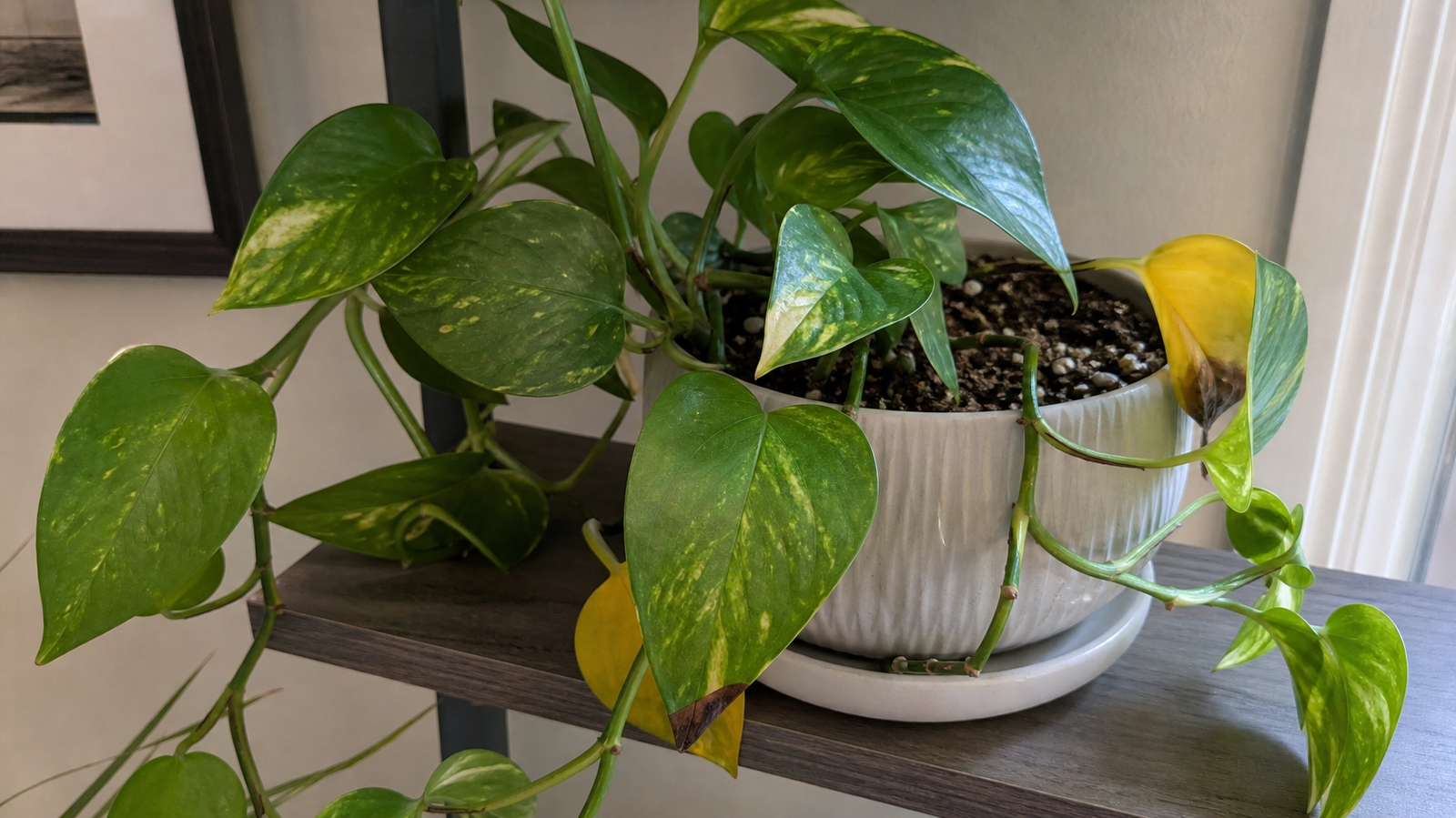
The good news is that a pothos is very clear about what it wants. The color of the damage, and where it shows up on the leaf, tells you a lot. Yellow leaves usually point in one direction. Brown tips and edges usually point in another.
This guide shows you how to read the signs, check the likely causes in the right order, and fix the problem. If you want the bigger picture on yellow leaves for all houseplants, read our guide on why houseplant leaves turn yellow too.
The Short Answer
- Yellow leaves are most often caused by too much water. Clemson Cooperative Extension says yellow leaves on pothos are usually caused by overwatering or low fertility.
- Brown tips and edges are most often caused by dry air, strong light, or soil that dried out too far.
- Pale or plain leaves (loss of the cream or yellow patterns) usually mean the plant needs more light.
- Drooping can mean too little water, but check the soil first. Soft, droopy leaves in wet soil mean the roots are in trouble.
Start with the soil. Push a finger in about an inch or two. If it is wet, you have your answer for the yellow leaves. If it is bone dry and the edges are brown, look at water, light, and humidity next.
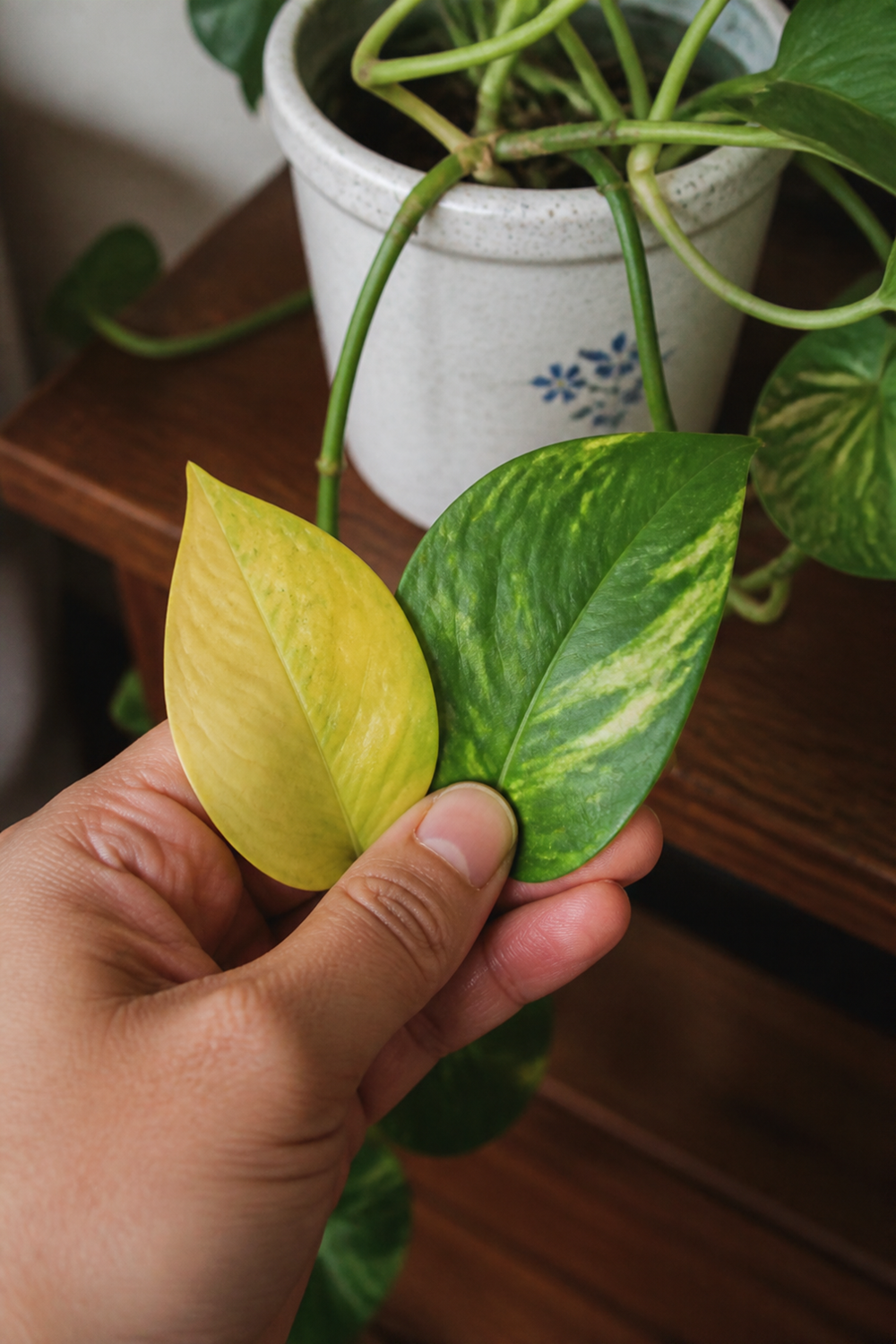
1. Yellow Leaves: Check the Water First
Pothos handle dry soil better than wet soil. Penn State Extension says the plant tolerates dryness better than wetness, and that overwatering causes root rot, one of the few real problems the plant has. Clemson Extension also lists root rot, caused by overwatering or soil that does not drain, as a common issue.
Here is how to tell if water is the problem:
- The soil is wet, heavy, or soggy a few days after watering.
- The yellow leaves are often lower or older ones, and they may feel soft.
- The stems near the soil feel mushy or look dark.
- The soil smells sour.
- The pot has no drainage holes, or the saucer is full of water.
The New York Botanical Garden says yellowing, falling leaves, or rotting stems usually mean overwatering or a soil that holds too much water. Our 30-second overwatered or underwatered check is a quick way to confirm it.
How to Water a Pothos the Right Way
- Let the top of the soil dry out, then water thoroughly so water runs out the drainage holes. Clemson Extension says to let the soil dry between waterings, then water well so moisture reaches all the roots.
- Empty the saucer. The New York Botanical Garden suggests checking after about 15 minutes and pouring out any water left behind.
- Water less in winter. The Botanical Garden says that in the dimmer months, you should water only enough to keep the soil from drying out completely.
- Plants in brighter spots dry out faster and need water more often than plants in dim spots.
One note: Extension sources differ a little on how dry is dry enough. Illinois Extension says golden pothos like the soil to dry moderately between waterings. Clemson says to let it dry out more fully. If you are unsure, wait an extra day or two. A pothos recovers from a little dryness much faster than from soggy roots.
If You Think the Roots Are Rotting
- Slide the plant out of its pot.
- Look at the roots. Healthy roots are firm and light. Rotten roots are dark, soft, and may smell bad.
- Trim off the rotten roots with clean scissors.
- Repot in a clean pot with drainage holes and fresh, well-draining mix.
- Water lightly and let the soil dry again before the next watering.
Our guide on how to repot a plant in 9 steps walks through the process.
2. Yellow Leaves From Too Much Sun
Pothos like bright light, but not harsh direct sun. Penn State Extension says direct sun can cause pothos leaves to yellow. The New York Botanical Garden adds that varieties with light-colored leaves burn easily in direct sun.
Signs of sun damage are different from signs of overwatering. The leaves facing the window turn pale, yellow, or bleached, the soil may be dry, and the leaves feel crisp rather than soft. The fix is simple. Move the plant a few feet back, or hang a sheer curtain. Our guide to natural and supplemental indoor light explains how to judge light in your rooms.
3. Yellow Leaves From Low Feeding
A pothos that has been in the same pot for a long time, with no food, may slowly turn yellow. Clemson Extension lists low fertility as a common cause of yellow leaves.
Extension sources give different feeding schedules:
- Clemson Extension suggests a houseplant fertilizer every other month in spring and summer.
- The New York Botanical Garden suggests a balanced organic fertilizer at half strength every two weeks, from March to September only.
- Penn State Extension suggests feeding once a month in winter and every two weeks the rest of the year.
That is quite a range, so pick the gentle end. Feeding lightly in spring and summer, and skipping winter, is a safe place to start. Our guide to organic fertilizers can help you pick a gentle option.
4. Brown Tips and Edges
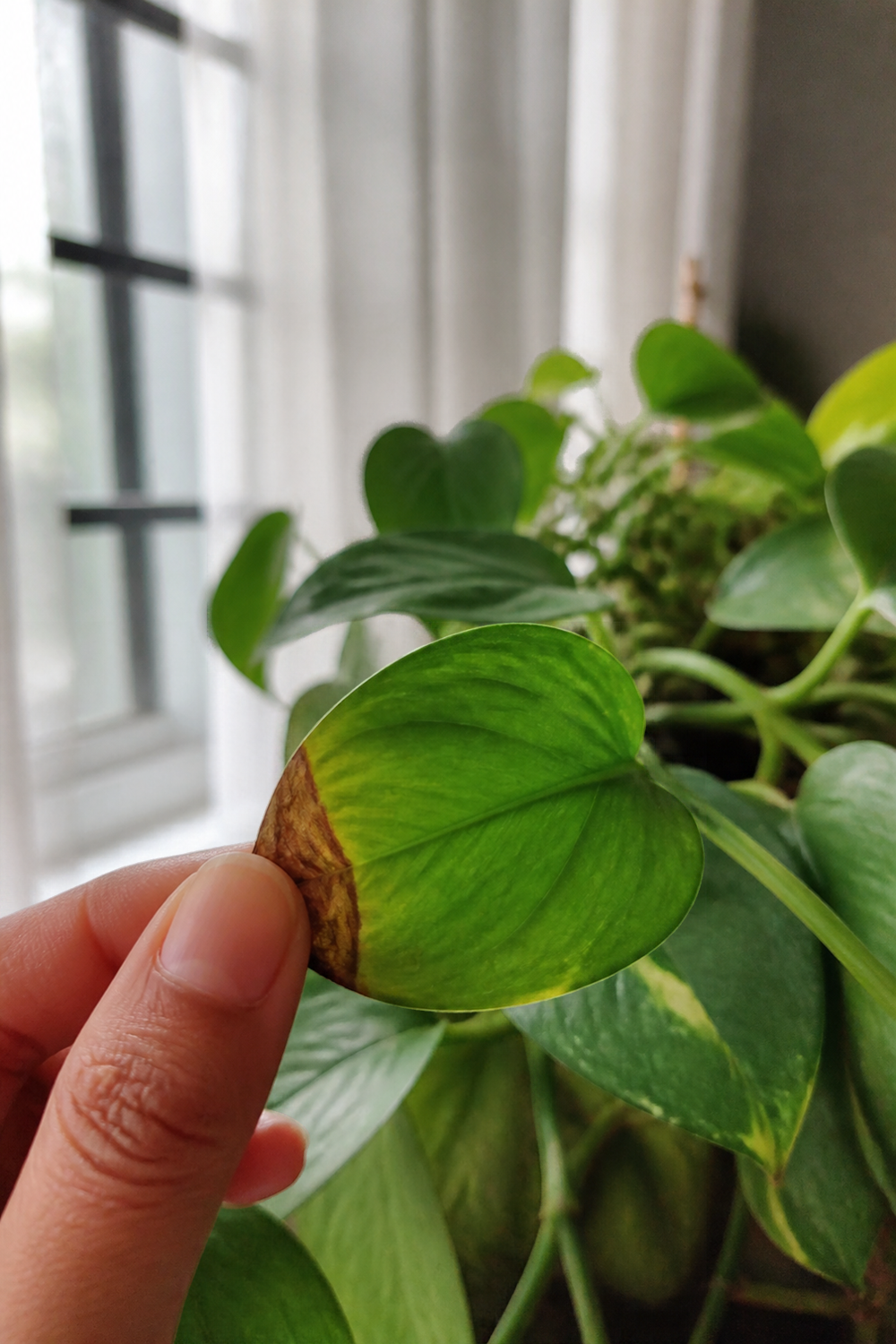
Brown tips look different from yellow leaves, and they have different causes. Extension sources point to a few.
Dry Air or Strong Light
Clemson Extension says brown tips, called leaf scorch or tip dieback, are usually caused by low humidity or intense light. It recommends bright, indirect light and higher humidity. Clemson says pothos prefer humidity of about 50 to 70 percent, but they tolerate the 30 to 60 percent found in most homes, and a humidifier can help if the air is very dry.
Clemson also recommends keeping plants away from air conditioning vents in summer, and away from cold windowsills and heating vents in winter, since hot or cold drafts can dry out the leaves.
Soil That Dried Out Too Far
The New York Botanical Garden says brown edges with brown spots on the leaves usually mean the root ball dried out during the growing season. If your plant gets brown, crispy edges and the soil is pulling away from the pot, it may simply need water more often. When this happens, water thoroughly, and check the soil more often for the next few weeks.
How to Tell Which One It Is
- Soil is bone dry and the pot feels light: the plant needs water.
- Soil is fine, but the plant sits near a heating vent or a very bright window: look at light and air.
- Only the very tips are brown while the rest of the leaf is green: dry air or a drying root ball is likely.
Brown or yellow leaves will not turn green again. You can trim off damaged leaves with clean scissors, or trim only the brown part. New growth will come in healthy once the cause is fixed.
5. Pale Leaves and Lost Patterns
Many pothos have cream, white, or yellow patterns on the leaves. If those patterns fade and the leaves turn solid green or pale, it is usually a light problem, not a disease.
Clemson Extension says variegated pothos may lose some color in dim conditions, and that Marble Queen, Snow Queen, and Pearls and Jade need the most light. Penn State Extension says that in low light the plant survives for a while but gradually loses its variegation. The New York Botanical Garden says the same, and adds that too much light can also fade leaf color.
If your pothos has lost its patterns, move it closer to a window with bright, indirect light. Turn the pot weekly, as Penn State suggests, so the plant grows evenly instead of leaning toward the light. If you have only dim rooms, see our list of the best low light indoor plants.
6. Temperature and Drafts
Pothos like a warm room. Extension sources give slightly different ranges. Penn State suggests 60 to 80 degrees Fahrenheit. The New York Botanical Garden suggests 65 to 80 degrees, and says to keep the plant above 55 degrees. Clemson suggests nights of 60 to 70 degrees and days of 70 to 85 degrees.
In short, normal room temperatures are fine. Trouble starts with cold windows in winter, blasts from heating vents, and air conditioning that blows right on the plant. These can dry out the leaves and cause brown edges.
7. Pests
Pothos rarely have pest trouble indoors, but it does happen. Clemson Extension says spider mites and mealybugs can occur. Look for fine webbing, white cottony spots, or sticky leaves, especially on the undersides and where the leaf meets the stem.
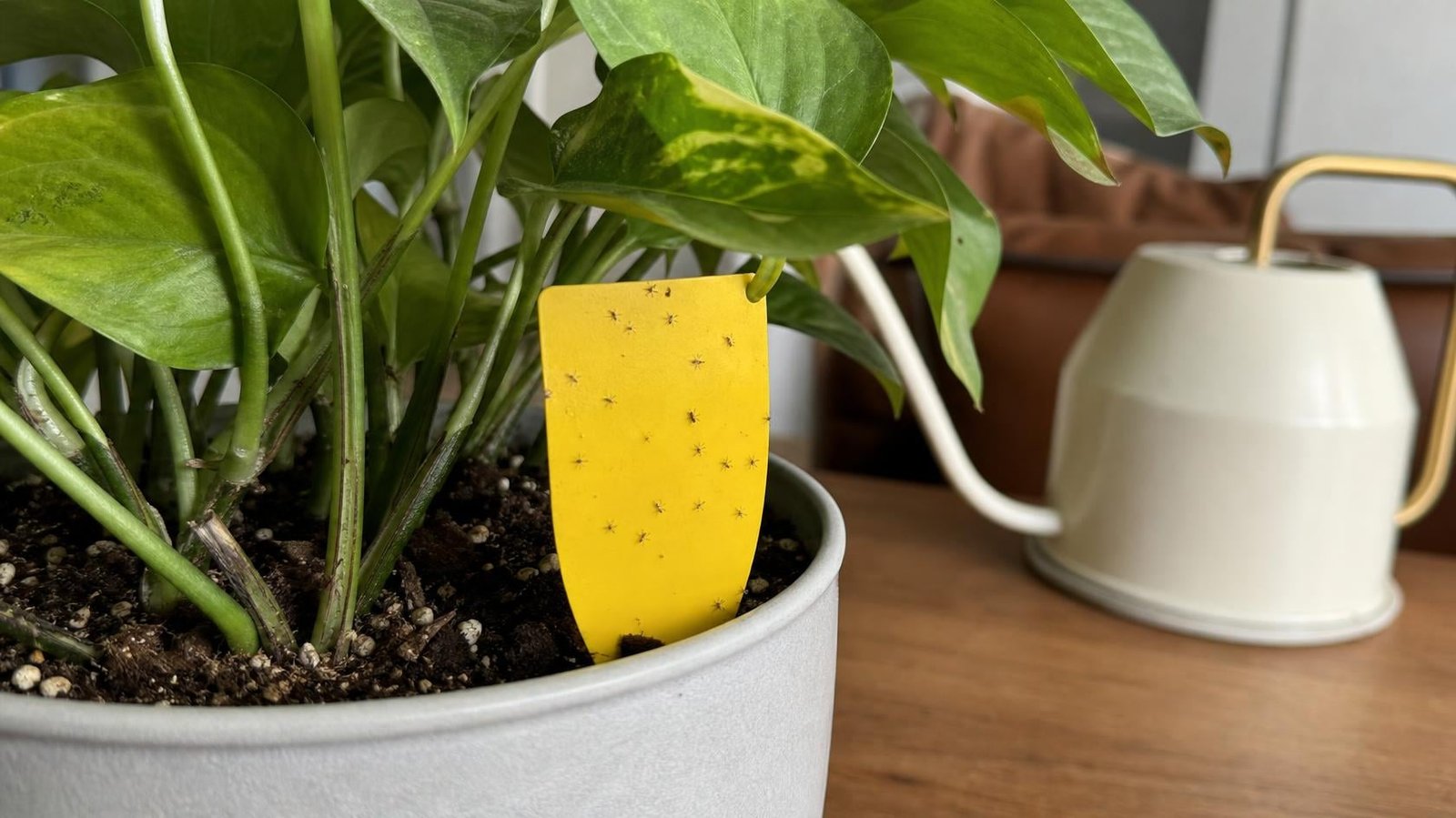
If you find pests, wipe the leaves with a damp cloth and check again every few days. For more options, see our guide to organic bug sprays and natural solutions. If you also see tiny flies near the soil, read our guide on getting rid of fungus gnats.
8. When It Is Time to Repot
A pothos that has outgrown its pot may need a fresh start. The timing advice differs among sources:
- Clemson Extension says to repot when roots show through the drainage holes or the plant is root-bound, which is typically every one to two years.
- Penn State Extension and the New York Botanical Garden suggest repotting yearly in spring, into a slightly larger pot.
Choose a pot with drainage holes and a light, well-draining mix. The New York Botanical Garden suggests going up just one pot size.
Quick Guide: Match the Symptom to the Cause
- Yellow, soft leaves, wet soil: overwatering or poor drainage.
- Yellow or bleached leaves near the window, dry soil: too much direct sun.
- Slowly yellowing leaves, long time without feeding: low fertility.
- Brown tips only: dry air, strong light, or drafts.
- Brown, crispy edges with spots, very dry soil: root ball dried out.
- Plain, pale leaves with no patterns: not enough light.
- Webbing or cottony spots: spider mites or mealybugs.
For a broader look at common plant care errors, see our list of common houseplant mistakes, and our beginner's guide to houseplant care.
How to Prune and Grow More Pothos
Trimming a pothos helps it grow fuller, and it gives you free cuttings.
Pruning
Penn State Extension says to trim vines with sharp scissors just above a node, or to remove a whole vine and leave a stub about 2 inches long. A node is the small bump on the stem where a leaf grows. New growth will come from there.
Propagating from Cuttings
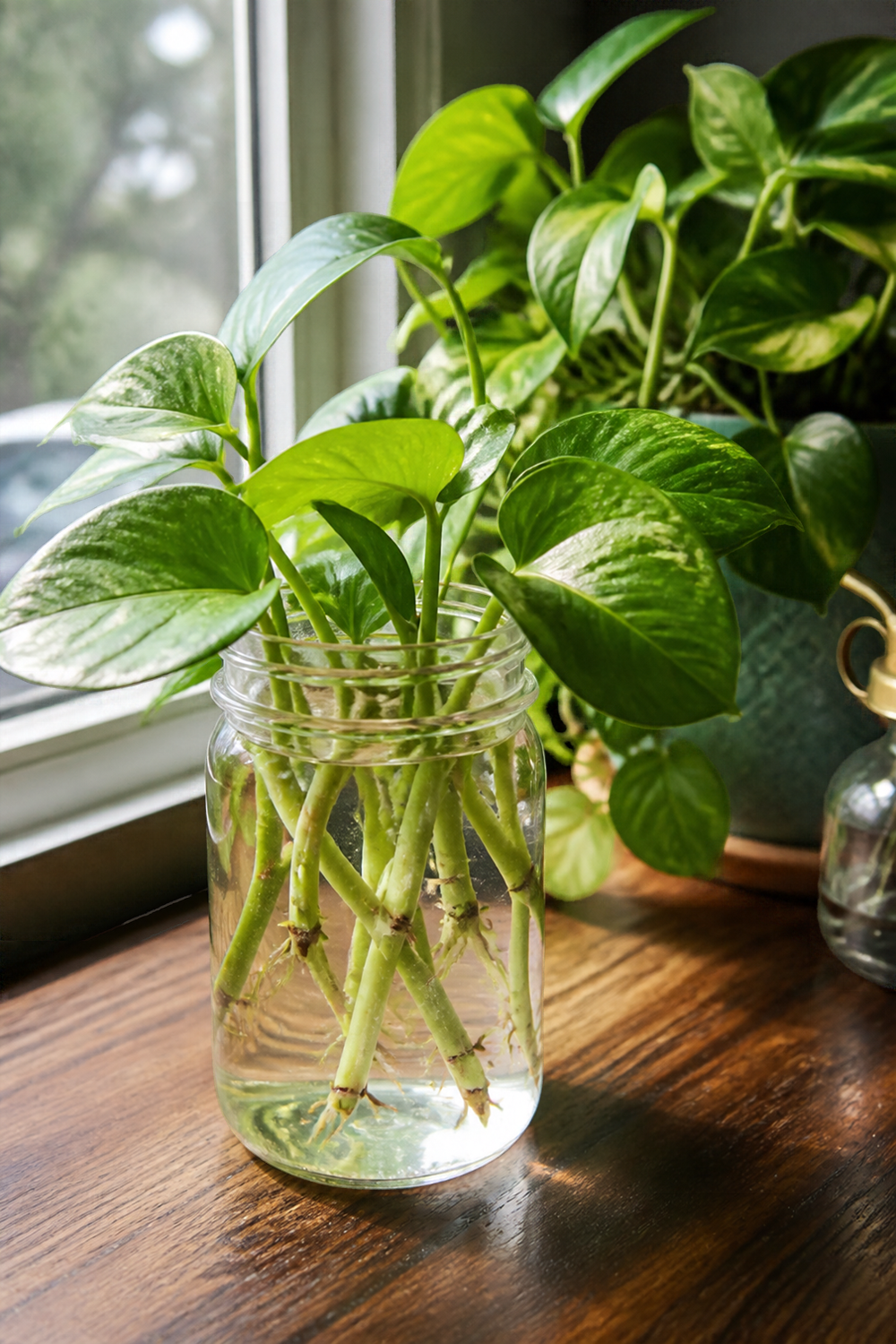
Clemson Extension says stem cuttings root easily in soil or water, but each cutting needs at least one node. Penn State says stem cuttings root most reliably from spring through summer. Cut a piece of vine with a few leaves and a node, and put it in water or moist soil.
This is also a good way to rescue a plant that has lost many leaves. If the roots are rotting but the vines still look healthy, cut healthy vine sections with a node and start new plants.
Is Pothos Safe for Pets?
No. The ASPCA lists golden pothos as toxic to both dogs and cats. It contains insoluble calcium oxalates, and symptoms can include mouth and tongue irritation, drooling, vomiting, and trouble swallowing. Clemson Extension also says all parts of the plant are mildly toxic if eaten and should be kept away from children and pets.
If you think your pet chewed the plant, call your vet or the ASPCA Animal Poison Control Center at (888) 426-4435. A fee may apply. If you have curious pets, our guides to non-toxic indoor plants safe for pets and pet-friendly plants list safer choices. If you prefer a trailing plant, our list of top indoor hanging plants has more ideas.
Frequently Asked Questions
Why are my pothos leaves turning yellow?
Most often it is too much water. Check the soil and the roots. Less common causes include too much direct sun and low feeding.
Why are my pothos leaves turning brown at the tips?
The usual causes are dry air, intense light, or a root ball that dried out. Check the soil first, then the spot where the plant sits.
Should I cut off yellow pothos leaves?
Yes, you can. They will not turn green again. Cut them off with clean scissors so the plant puts its energy into healthy growth.
How often should I water my pothos?
There is no fixed schedule. Water thoroughly when the top of the soil is dry, and empty the saucer afterward. Water less in winter.
Can a pothos live in low light?
Yes, for a while. Extension sources say it survives in low light, but grows slower and loses its leaf patterns over time. Bright, indirect light is best.
Why is my pothos drooping?
Penn State Extension says underwatering may cause temporary drooping. But drooping can also come from root rot, so check the soil before you add water.
Does a pothos need a humidifier?
Not usually. Clemson Extension says pothos tolerate normal home humidity. A humidifier can help if the air is very dry and the leaf tips keep browning.
Is a pothos the same as a philodendron?
No. They look alike, but they are different plants. Illinois Extension notes that pothos have ridged stems, while philodendron stems are smooth.
Final Thoughts
A pothos tells you what is wrong, if you know how to read it. Yellow leaves usually mean too much water. Brown tips usually mean dry air, strong light, or soil that dried out. Pale leaves mean it wants more light.
Start with the soil, then check light, then humidity. Most pothos recover quickly once you fix the cause, and any healthy vine you trim off can become a brand new plant.